I've been pulling plugs out of marine engines for over 20 years, and I still look at every single one carefully before I do anything else on a diagnosis. The plug is a window into the combustion chamber. The color, the texture, the smell, the deposits — all of it means something. Here's exactly what you're looking for.
The 8 Spark Plug Conditions You Need to Know
Each condition below tells a different story. Some are harmless, some are urgent warnings. Here's how to read all of them:
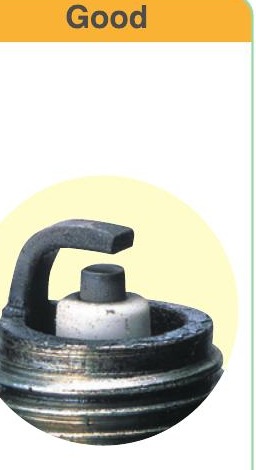
Normal / Healthy
Light tan, grayish-brown or khaki color on the insulator tip. Minimal deposits. Electrodes have clean, defined edges with no erosion. No damage anywhere.
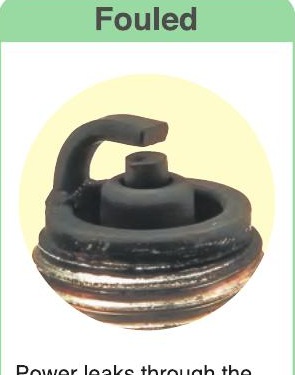
Carbon / Dry Black Fouling
Dry, matte black or dark gray, sooty deposits covering the insulator and electrodes. Not shiny — it looks like soot. The plug smells like unburned fuel.
Oil Fouled
Wet, shiny, black or dark brown oily coating all over the plug. If you're not sure it's oil vs. carbon, smell it — oil has a distinct burnt oil odor. The plug may feel slick to the touch.
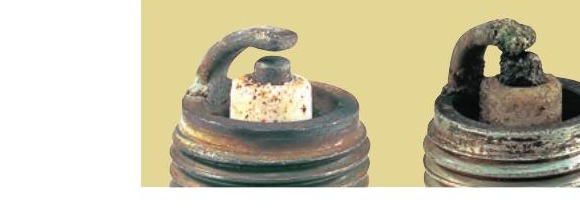
Lean Condition / Overheating
Stark white, chalk white, or very light gray insulator — almost bleached looking. In worse cases the insulator looks blistered or chalky. Electrodes may show erosion or pitting. No deposits — everything is burned clean.
Detonation (Knock)
Black or dark gray with black specks or tiny metallic flakes on the insulator. The insulator tip may show hairline cracks. Electrodes are eroded or chipped. In severe cases the ground electrode is damaged or broken.
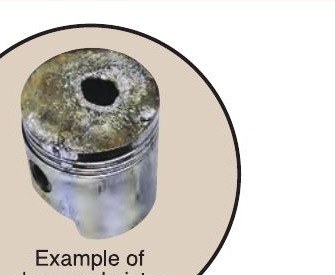
Pre-Ignition
Melted or severely blistered insulator tip. The center electrode may be partially or completely melted. Ground electrode severely burned or deformed. This is the worst condition you'll find — it means the plug itself got so hot it was acting as a glow plug and igniting the charge before the spark.
Glazed / Lead Fouled
Shiny yellow, gold, or yellowish-brown glaze coating the insulator. It can look almost varnished. This is different from oil fouling because it's shiny rather than wet-looking — it has a hard, baked-on appearance.
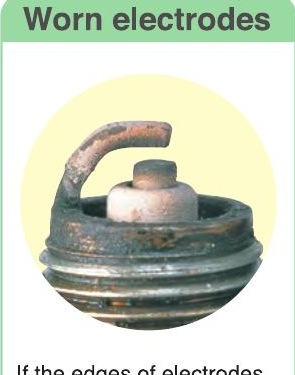
Worn / Eroded
The center electrode is visibly rounded — no longer has a sharp edge. The ground electrode may be thin or eroded. The gap will be wider than spec. The color might look normal otherwise.
Condition photos courtesy of NGK Spark Plugs (U.S.A.), Inc. — used with permission pending.
Understanding Heat Range
Plug heat range is one of the most misunderstood specs. It has nothing to do with how hot the spark is — it describes how well the plug dissipates heat away from its tip into the cylinder head.
A plug that runs too cold will foul with carbon deposits because it never gets hot enough to burn them off. A plug that runs too hot risks pre-ignition. The "self-cleaning range" is where you want to be — between about 900°F and 1,450°F at the tip. Always use the heat range specified for your exact engine. On marine engines especially, don't substitute automotive plugs — marine ignition systems are suppressed differently and the heat ranges are not always interchangeable.
What to Do When You Find a Problem Plug
Finding a bad plug is only half the job. You have to fix the underlying cause or the new plug will fail the same way. Here's how to act on what you found:
Carbon or Rich Fouling
Check choke operation, float level, needle and seat, jets, and air filter. On EFI engines check injector condition and fuel pressure regulator. Run the engine harder — carb engines need to reach full operating temp regularly.
Oil Fouling
Perform a compression test and wet compression test to identify the cylinder. Check valve seals, piston rings, and head gasket condition. This is a mechanical repair — a new plug is just a temporary band-aid.
Lean or White
Check all intake manifold and carb base gaskets for air leaks. Verify fuel pressure and pump delivery volume. Check cooling system. On carbs: check needle position, emulsion tubes, and main jet sizing.
Detonation or Pre-Ignition
Stop running the engine and inspect the cylinder. Check timing, verify you're running the correct octane fuel, look for carbon buildup, and verify the cooling system is working properly. These conditions cause lasting engine damage.
🔧 What You'll Need
* Affiliate links — I earn a small commission if you buy through these at no extra cost to you.
Not sure what you're looking at?
Describe the plug condition and which cylinder it came from — I'll help you figure out what's going on.
Ask Blaine →Technical References
The technical content in this article was written based on hands-on experience and cross-referenced against the following industry sources. All written descriptions, interpretations, and visual illustrations are original to OldSchoolBoatGuy.com.